Research and Creative Strengths
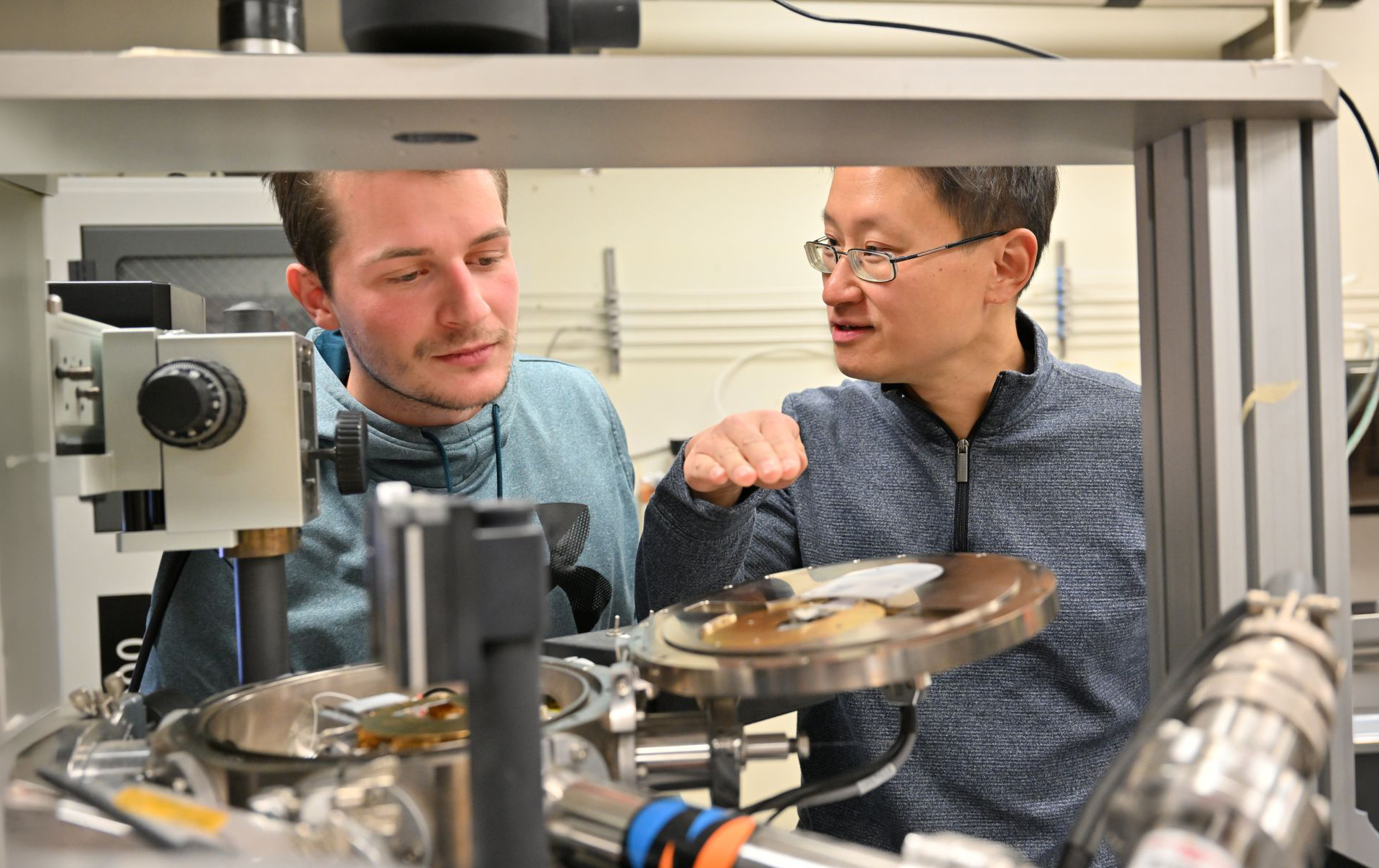
Across the College of Arts and Sciences, research and creative work connect discovery, expression, and impact. Our faculty and students ask questions that deepen understanding, open new possibilities, and help communities navigate a changing world.
Discovery starts with asking bigger questions.
Research and creative scholarship span the sciences, social sciences, humanities, and arts – connecting many ways of understanding the world. Our faculty and researchers investigate core questions about matter, the environment, health, behavior, culture, history, and creative expression.
That breadth is one of our greatest strengths. It helps researchers, scholars, and artists cross disciplinary boundaries, bring different perspectives to complex challenges, and create knowledge with impact beyond the university.
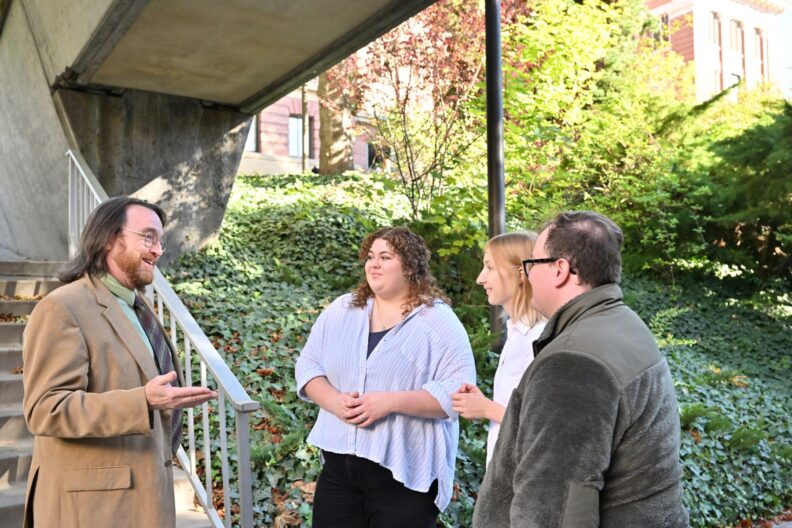
Climate, Environment & Resilient Communities
Understanding a changing planet and helping communities respond.
Across climate and environmental research, CAS scholars examine the systems that sustain communities, ecosystems, water, wildlife, and natural resources in a changing world.
Strengths include climate science, hydrology, biodiversity, wildlife ecology, aquatic systems, conservation, ecosystem response, environmental governance, and impacts on communities and natural resources.
Human Health, Behavior & Well-Being
Understanding what shapes healthier lives.
CAS researchers examine health and well-being across the lifespan, with attention to how biology, behavior, culture, environment, and social conditions shape healthier lives.
This work includes mental and behavioral health, child development, substance use prevention, cognition, sleep, reproductive and maternal health, infectious disease, aging, and disparities in access, experience, and outcomes.
Nuclear Science, Materials & Extreme Conditions
Discovering how matter behaves and what becomes possible because of it.
CAS has distinctive strengths in nuclear science, materials research, condensed matter physics, and matter under extreme conditions.
Researchers study nuclear and radiochemistry, actinide and f-element chemistry, nuclear materials, nuclear theory, shock physics, high-pressure chemistry and physics, advanced ceramics, semiconductors, and surfaces and interfaces.
This foundational research advances understanding of matter and opens opportunities in energy, national security, advanced materials, and emerging technologies.
Life & Social Sciences, Ecology & Evolution
Exploring life from molecules to ecosystems.
In the life sciences, CAS faculty examine and analyze living systems from genes and cells to organisms, populations, and ecosystems.
Research spans ecology and evolution, genetics and molecular biology, plant and animal biology, disease ecology, reproductive and developmental biology, plant-soil interactions, biodiversity, and adaptation to environmental change.
These discoveries deepen our understanding of life and contribute to questions in human health, food systems, conservation, and environmental resilience.
Society, Communities & Institutions
Understanding how societies work and how they change.
CAS social scientists examine how people organize, govern, adapt, and make meaning within families, communities, institutions, and societies.
Research across the College explores inequality, family and community life, culture and behavior, politics and public policy, criminal justice, identity, and social and demographic change.
Through evidence, analysis, and engagement, our researchers help highlight the systems that influence people’s lives and provide new ways to understand some of society’s most complex challenges.
Humanities, Culture & the Human Experience
Understanding where we’ve been, who we are, and where we’re going.
Humanities scholars explore how people interpret meaning, remember the past, imagine futures, and understand their responsibilities to one another and the world.
Through history, philosophy, languages, literature, rhetoric, and interdisciplinary inquiry, CAS scholars examine ideas, texts, traditions, and experiences across time and place.
Their work provides essential historical, ethical, and cultural perspectives on questions ranging from identity and democracy to technology, artificial intelligence, environmental change, and the future of society.
Where Disciplines Connect
Some of the most interesting questions don’t belong to a single discipline.
When climate science intersects with public policy, psychology informs technology, philosophy shapes AI, artists collaborate with scientists, or history reframes today’s challenges, new questions and possibilities emerge.
The College of Arts and Sciences creates the environment for those possibilities.
With expertise spanning the sciences, social sciences, humanities, and arts, CAS brings together different ways of asking questions, testing ideas, interpreting evidence, and creating knowledge.
Creative Scholarship, Arts & Expression
Creating new ways to experience and understand the world.
Creative activity expands what discovery can look like.
Across visual art, music, digital media, performance, and interdisciplinary creative practice, CAS faculty members create work that tests ideas, challenges assumptions, and connects audiences with new ways of seeing.
Creative scholarship also crosses disciplinary boundaries, bringing artistic practice into conversation with technology, science, history, culture, and contemporary social questions.
Data, AI & Emerging Technologies
Connecting technological change with the questions that matter.
Artificial intelligence, data, and emerging technologies are changing what researchers can ask, analyze, create, and understand.
Across CAS, scholars use computational modeling, data analytics, AI, digital humanities, advanced instrumentation, and other tools to pursue new questions and develop new approaches to research and creative work.
Just as importantly, our faculty examine the human side of technological change: its ethical, cultural, historical, behavioral, and societal implications.
That combination positions CAS to shape not only what new technologies can do, but how they should be understood and used.
Curiosity drives discovery.