College of Arts and Sciences Three Minute Thesis
| Name | Thesis Summary |
|---|---|
 Shamila GopalakrishnanChemistry1st Place | Tiny Carriers, Remedy for unmet medical needs: Smart drug delivery systems for ocular and brain diseasesOcular and central nervous system (CNS) diseases are major global health challenges, affecting billions of people and leading to significant disabilities. Ocular conditions like proliferative vitreoretinopathy (PVR) result in vision loss in 8-10% of retinal detachment surgery patients. Moreover, CNS disorders contribute to 400 million years of disability-adjusted life, with traumatic brain injuries impacting over 60 million people annually. Despite medical advances, current treatments are limited because traditional treatments often fail to deliver drugs precisely where they are needed. Moreover, medicines are exposed all over the body, leading to inefficient results and harmful side effects.This thesis is focused on developing smart nanocarriers using dendrimers for disease-specific targeting and drug delivery. Dendrimers are nanoscale, tiny, tree-like structures with controlled size, offering precise control over composition, shape, solubility, and surface functionality. These features make dendrimers a versatile platform for targeted drug delivery, allowing efficient attachment of payloads such as targeting ligands, imaging agents, and therapeutic molecules, providing an ideal platform for targeted drug delivery. In simple terms, dendrimers carry desired drugs directly to diseased cells. This approach exponentially improves drug solubility and reduces side effects due to precise delivery while improving treatment outcomes. Cell studies and preclinical studies in animal models have shown efficient targeting of our dendrimers to the injured brain and ocular regions and confirmed the delivery of drugs. Ultimately, dendrimer-based nanomedicine has the potential to revolutionize the next generation of treatment for brain and ocular diseases, offering patient compliance and more effective therapies. |
 Desmond AboagyePlant Biology2nd Place | The Physiological Relationship Between Prunning and Sieve Tube ConductivityMajority of the food mankind consume are storage sinks loaded with photoassimilates. Photoassimilates, the energy-rich molecules produced in the leaf during photosynthesis is translocated through a continuous microfluidics network of stacks of sieve elements spanning the entirety of the plant and supplying the assimilates needed for growth, development, and storage. Understanding the control mechanisms regulating allocation of assimilates to specific tissues could unveil the ability to direct flow to preferred sinks. The current hypothesis for long distance phloem transport, the so-called “High-Pressure Manifold Model (HPMM)” proposes a consistent hydrostatic pressure along the entire transporting tubule, implying abundant assimilate regardless of the location of the receiving tissue. For this to be true, the conductivity of the transporting tubule has to be actively adjusted to overcome the resistance relative to the location of the receiving sinks. The high-pressure manifold model is tested by manipulating the distance between the photosynthesizing tissues and the receiving sinks in multiple plant species. Microscopy techniques are adopted to estimate specific sieve tube conductivity. |
 Nazua IdrisEnglish3rd Place | Unsilencing Colonized and Enslaved Voices: Decolonizing the 19th-Century British Literary Canon through CounterNarrativesThe scholarly and pedagogical practices of nineteenth-century literary studies are still dominated by the British literary canon. Even though the nineteenth-century literary curriculum is often diversified by including “colonial texts” written by white British authors living in the colonized and enslaved territories, such diversity initiatives result in further silencing of the lived experiences of the local people. Contemporary BIPOC scholars advocate for decolonizing this field by including literary works by BIPOC authors and scholars. However, their call to decolonize fails to address the continued silencing of the colonized and enslaved voices from the nineteenth century as these scholars propose using neo-Victorian texts (twenty-first-century texts set in nineteenth-century England) as alternatives.In my dissertation, I argue for decolonizing nineteenth-century literary studies by including nineteenth-century Anglophone counternarratives––texts written/narrated by and from the perspectives of the colonized and enslaved populations. CounterNarratives are stories that are told from the perspectives of marginalized communities to challenge the dominant narratives. My dissertation project embodies decoloniality by––
|
 Yin Ru ChenPolitical Science | Evaluating Gender Mainstreaming in Taiwan: a Case StudyGender Mainstreaming (GM) has been implemented in Taiwan for over 15 years and applied to all government branches. Nevertheless, the GM program was only examined once during the long execution, and the results were ambiguous. Therefore, this research aims to bridge the gap and provide suggestions for future improvement.This research analyzes Taiwan’s GM program from macro and micro perspectives using program theories. The macro-perspective analysis shows that the Taiwan government adopted GM without antecedent evaluation. Furthermore, the GM program was not properly designed and failed to build a functional program rationale. Therefore, the causations between inputs and outputs were obscure, and the outcomes were ambiguous. On the other hand, from the micro-perspective analysis, we found that the six instruments involved in program implementation were not fully operated until after 2019. Additionally, not every individual instrument has been effectively operated since 2005. Moreover, we also found that these six instruments employed for executing GM were not specifically for the GM program because policymakers used the GM program as a means to endorse existing administrative instruments. Half of the six instruments had been implemented prior to the adoption of GM. Even the policymakers could not explain how the GM program was designed. Therefore, to improve the GM program, we would like to suggest that the Taiwan government amend the program design, ensure the complete implementation of six instruments, and clearly identify the goals and expectations for the GM program. |
 Abbas MammadovPolitical Science and Government | A Measure of Government Stability: How Chief Executives’ Individual Characteristics Impact Staff Turnover within the Security CouncilThis study delves into the intricacies of staff turnover rates within the respective Security Councils of Russia, Azerbaijan, and Kazakhstan, focusing on the impact of individual characteristics of key decision-makers. Employing thematic analysis, the research explores the turnover dynamics across these regimes and uses leadership trait analysis to gauge the individual characteristics of selected political leaders. The objective is to illustrate the significance of these individual characteristics as predictors of leaders’ decisions concerning staff turnover, offering insights into the overall stability of the key government groups tasked with advising on national security and foreign policy. By showcasing the interplay between individual characteristics and turnover dynamics, this study contributes to a deeper understanding of the politics in former Soviet states, underscoring the importance of examining the individual for a comprehensive grasp of political activities. While the study recognizes the limitation of a small sample size in exploring all possible combinations of individual variables, it suggests that future research could address this by incorporating a larger pool of political leaders. The study’s findings offer valuable insights into the influence of individual characteristics on turnover dynamics and security/foreign policy decision-making processes in non-democratic regimes, potentially aiding policymakers, and researchers in comprehending the decision-making processes of such regimes, particularly in the post-Soviet landscape. |
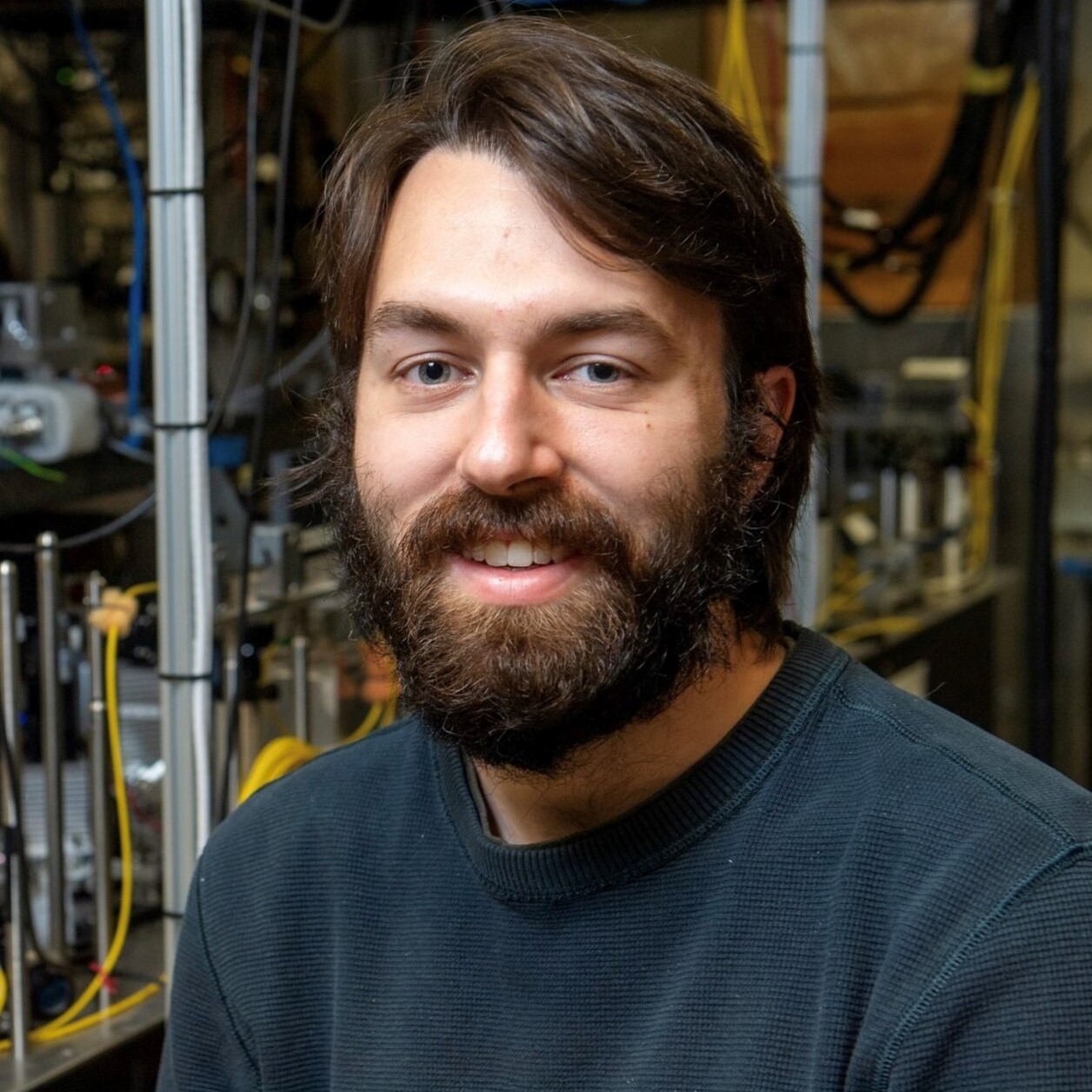 Colby SchimelfenigPhysics and Astronomy | Bose-Einstein Condensates as a Testbed for Quantum BehaviorPhysics encompasses various regimes, each dominated by different physical principles. In everyday life, we interact within the realm of classical physics. Over the past century, however, physics research has ventured beyond this classical domain, uncovering phenomena that classical theories cannot explain. New theories are essential for accurately explaining certain physical dynamics and properties observed in the universe.Quantum physics represents a particularly exciting and relatively new regime, predicting the behavior of objects on extremely small scales. While in classical physics, we often think about atoms as particles like billiard balls, quantum mechanics reveals that atoms also have a wave nature, in certain aspects behaving similar to light waves. Associated with this dual nature is also a fundamental uncertainty: unlike classical physics, where objects have definite positions and momenta, quantum physics introduces an inherent uncertainty in these observables. This uncertainty is a fundamental aspect of quantum physics, distinguishing it from classical physics. Interestingly, the quantum regime can be accessed not only by examining very small scales but also by reaching extremely low temperatures. By cooling a cloud of atoms from room temperature to near absolute zero, we can create a new state of matter known as a Bose-Einstein condensate. This state is remarkable for exhibiting quantum properties on a macroscopic length scale. My research focuses on using Bose-Einstein condensates as a platform to study quantum phenomena. This includes observing quantum-induced scattering between atoms, creating model systems that mimic properties found in condensed matter systems, and directly probing nonlinear effects in the condensate. These research topics have direct applications in metrology, quantum circuitry, and materials science, making them fundamental to modern physics and engineering. |
 James SchroederHistory | An American Foreign Legion: The Recruitment of European Refugees for United States Military and Psychological Warfare Programs During the Early Cold WarThis study examines how and why the Truman Administration recruited skilled German and Eastern European veterans, specialists, and refugees for military research, intelligence, and psychological warfare programs during the early Cold War in the borderlands of US-occupied Germany. Originating from US Army efforts to exploit captured German knowledge and technology, Cold War tensions prompted these programs to evolve into mutually supportive operations to strengthen American military and intelligence capabilities against the Soviet Union. Initiated by the Army in mid-1945, Project Paperclip recruited several hundred German specialists for American research programs while the Army Historical Division employed German prisoners of war to analyze Wehrmacht experiences against the Soviet Union. Army Intelligence simultaneously recruited German veterans through Operation Rusty to construct intelligence networks targeting the Soviet Bloc while Army Labor Service Units (LSUs) containing tens of thousands of Germans and Eastern Europeans supported US military operations in Germany.During the early 1950s, the Army and the Central Intelligence Agency (CIA) depended on foreign nationals when implementing programs to foment wartime resistance movements behind the Iron Curtain. The Lodge Act of 1950 authorized the Army to enlist Soviet Bloc nationals as combat soldiers and liaison officers. The CIA’s Operation Aerodynamic supplemented Army programs by airdropping Ukrainian agents into the Soviet Union from 1949 to 1952 to contact Ukrainian partisans, efforts intended to construct an early warning system against Soviet attack and establish peacetime relationships with wartime allies. A shortage of recruits prompted Aerodynamic’s transition in late 1952 into a propaganda operation targeting Soviet Ukraine, supporting the Truman Administration’s broader embrace of psychological warfare. This strategy included establishing the United States Escapee Program (USEP) in 1952. The USEP encouraged defection while advertising American benevolence by subsidizing aid and resettlement services for the tens of thousands of Soviet Bloc refugees not employed by the United States, ensuring they indirectly supported American psychological warfare campaigns. These recruitment programs together illustrate the multinational composition of American national security operations, and the vital contributions Germans and Eastern Europeans made to American security and technological development from the frontlines of the Cold War. |