
By Communications staff, WSU Insider
Though the upper story of an aging, red-brick building in Colton, Washington, may seem an unlikely location for a fine art photography studio, Kean Wilcox has produced his own images and bought, sold, and traded rare photographs there since 2016.
Even more remarkable is the collection of historic photographs that was, until recently, housed inside. In October, Wilcox donated most of the collection, along with his extensive library, to Washington State University’s Manuscripts, Archives, and Special Collections (MASC).
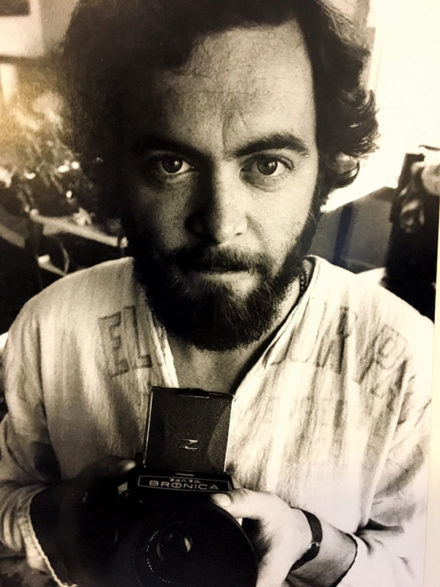
“I never met a photograph I didn’t like,” said Wilcox, who nevertheless developed a discerning eye.
The photographs he collected consist of hundreds of images exceptional for their quality, subject matter, or as examples of various photographic techniques.
Soon after completing a Master of Fine Arts at WSU in 1993, Wilcox became increasingly interested in fine art photography produced between 1880 and 1920. The images he accumulated include examples of a photo printing process known as the Woodburytype. Woodburytypes are renowned for their superb quality and make up the bulk of the collection donated to WSU.
Photographs produced from 1880 to 1920 are abundant, but the collection also includes more modern images, such as portraits of Soviet and American actors from the 1950s. The result is a beautiful and varied group of images that span the history of photography.
The Kean Wilcox Photograph Collection will join more than a million historic photographs in MASC. The Wilcox Collection is a unique addition to MASC for the varied photographic processes represented. MASC will make the collection available to researchers and the public and hopes to use the images in classes on the history of photography and related subjects.
Wilcox began collecting photographs in 1977, one year after completing a master’s degree in applied industrial arts at San Diego State University. His early collecting focused on Civil War portraits. In these images, Union and Confederate soldiers sat for the camera, often in uniform posing with guns, sabers, drums, or other matériel. A photographer would produce a positive image directly from the camera and hand it to the sitter. These photographs were frequently given to family members back home.
Wilcox served four years in the Marine Corps and partly credits his service for stoking his interest in the genre. “Collecting Civil War portraits helped me to explore and share my personal feelings of pride and patriotism that weren’t necessarily shared by the general public during the Vietnam War era,” Wilcox wrote in a 2022 article for Military Images.
His collecting had a practical as well as a personal aim. Wilcox taught photography courses at Palomar College in San Marcos, California, for almost 10 years. His growing collection allowed students to learn about historic photographic processes firsthand. In 1985, Wilcox completed a sabbatical at the California Museum of Photography, gaining expertise in identifying various photographic processes and cataloging the images for the museum.
“After the sabbatical leave, I was hooked,” said Wilcox, who began selling photographs and showing his own work at juried photography shows. He stopped teaching and moved to the San Juan Islands in 1990. Soon afterward, he completed his MFA at WSU in 1993 while transitioning into buying, selling, and trading historic and artistic images full time.
History of the Woodburytype
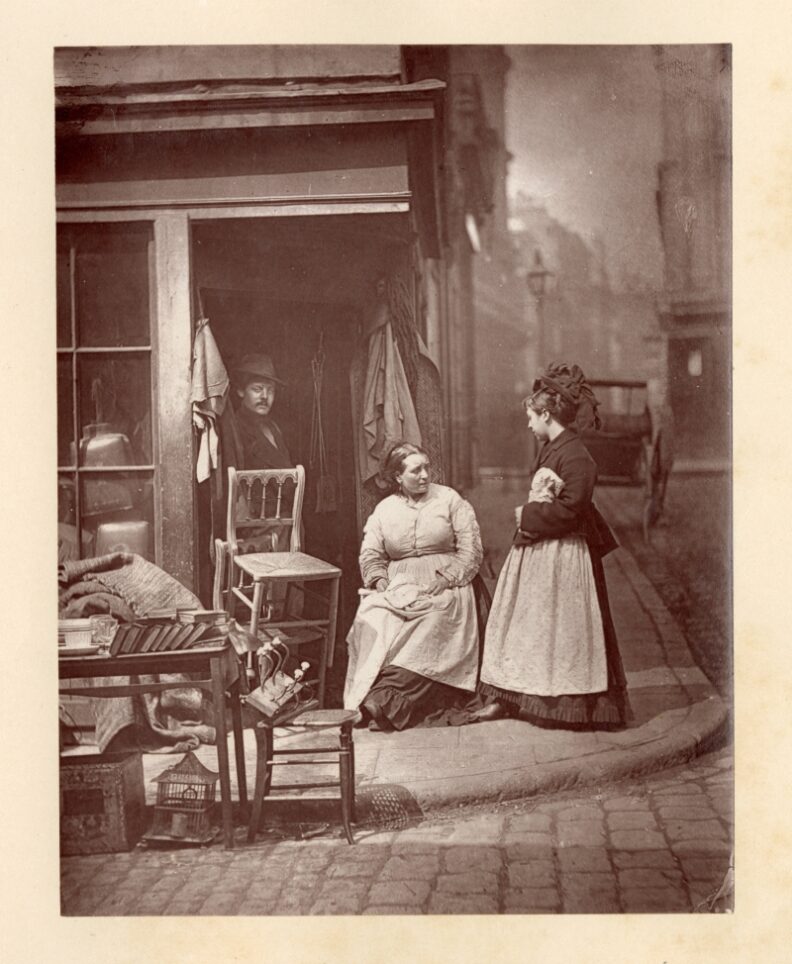
Walter Bentley Woodbury announced his new photo printing technology in an 1865 article in the British Journal of Photography. At that time, photographers captured images on paper, glass, and metal plates for decades, but no one had developed a viable method to reproduce photographs on a large scale. Photographs were by and large single, unique items, and publishers looking to illustrate their texts continued to rely on metal or wood engravings. Woodbury’s method changed that paradigm.
In “A History of the Woodburytype,” Barret Oliver writes that Woodbury’s new printing process was “swift, less expensive and … capable of faithful reproduction …” compared to other processes. Woodburytypes had, in addition, “inherent visual beauty” that seemed, to the untrained eye, “exactly like true photographic prints.”
These qualities are what drew Wilcox toward Woodburytypes. “They were just perfect images, every single one,” he said. “Each image was absolutely flawless with no fading.”
Wilcox also became interested in Woodburytypes for their unique context. “Every Woodburytype … was published in something or about something,” Wilcox noted. Publishers used the images to illustrate scientific papers, news articles, literary works, and more. “I thought, ‘Here’s not only an interesting picture and photographer but also the week’s news.’”
Cheaper, faster technologies eventually displaced the Woodburytype, and the last functioning Woodburytype press was sold for scrap metal in 1928.
In his “History of Photography,” Josef Maria Eder characterizes Woodburytype prints by their “soft gradations,” “superb rendering of middle tones,” and “modulated shadows.” These qualities are evident in the examples now at MASC.
“I am grateful for Kean’s generous donation,” said Interim Dean of Libraries Trevor Bond, adding that the superb collection will be an important resource both for teaching the history of photographic processes and for the content of the images, particularly the documentation of British colonialism, London street life, and French culture at the end of the 19th century.
“I may not be around to see it,” reflected Wilcox, who is battling cancer, “but [the collection] is going to be around to show people what photography is as I know it.”
Those interested in seeing the Kean Wilcox Photograph Collection can email MASC.