By Will Ferguson, WSU News & Media Relations, WSU Insider
An international research collaboration involving a Washington State University scientist has received a 2025 SAF Research Award from the Shanghai Archaeology Forum for its work uncovering the long-term global dynamics of inequality.
The project, co-led by WSU archaeologist and Regents Professor Emeritus Tim Kohler, was one of 10 international initiatives recognized at the SAF annual meeting in Shanghai on Dec. 15, selected from 140 nominations worldwide. Known as the GINI project (Global Dynamics of Inequality over the Long Term), the effort brings together two dozen researchers from institutions around the world to examine how wealth inequality and economic growth have shaped human societies over millennia.
Launched in 2021, the project uses archaeological housing remains as a window into past wealth distribution. The team has assembled a database of more than 53,000 residential buildings across 4,000 archaeological settlements worldwide, using housing size as a standardized proxy for wealth to enable cross-cultural and long-term comparisons.
The GINI project uses archaeological housing remains as a window into past wealth distribution, examining how wealth inequality and economic growth have shaped human societies over millennia.
“Economic growth and inequality are fundamental to how societies operate and to the lived experiences of their members,” said Kohler. “They are also deeply connected to other aspects of social life, including the extent to which human rights are honored.”
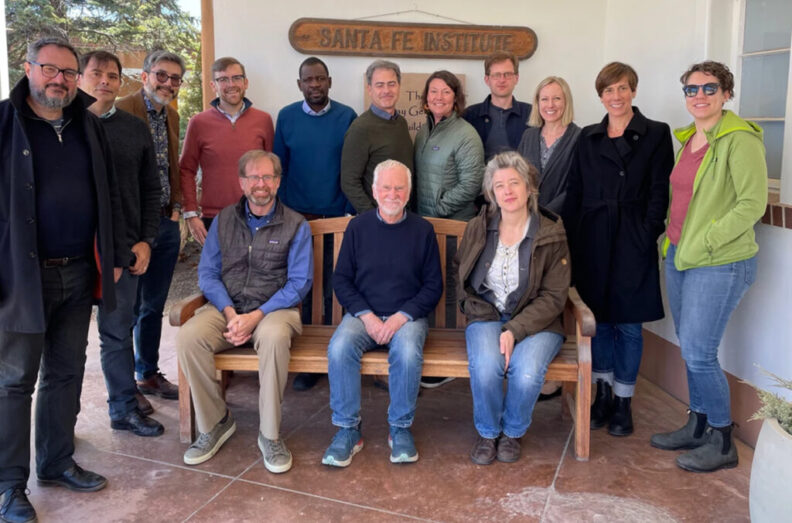
Kohler works alongside Amy Bogaard of the University of Oxford and Scott Ortman of the University of Colorado Boulder to guide the project. Earlier this year, the team published a special issue in Proceedings of the National Academy of Sciences (PNAS), building on collaborative meetings and working groups hosted by the Santa Fe Institute in 2023 and 2024.
The SAF award highlights the growing impact of WSU-led archaeological research on global conversations about inequality, long-term economic development, and the roots of modern social challenges.
“I think it is so important that projects like ours are being recognized by the global archaeological community,” Ortman said, who accepted the award on behalf of the team in Shanghai. “It shows that archaeology can provide powerful, long-view insights into fundamental social processes that still matter today.”