By Shawn Vestal, WSU News & Media Relations, WSU Insider
The warming climate fosters hotter temperatures, more intense storms, larger wildfires, and longer droughts, among other extremes. But how much does human-caused climate change influence a specific event such as a heat wave or storm?
Scientists in the field of extreme event attribution are increasingly able to answer that question, according to a new report from a 14-member committee of the National Academies of Sciences, Engineering and Medicine — including Washington State University’s Deepti Singh.
The consensus report concludes that attribution science has advanced “considerably” since the last NASEM report on the subject a decade ago, thanks to improvements in scientific tools, observational data and modeling.
“It’s a question that often gets asked every time there’s an extreme weather event: How much did climate change make this worse?’” said Singh, who first studied extreme event attribution science while working on her PhD in the early 2010s as the field had just started emerging. She has since become a national leader in the discipline.
“The field has rapidly evolved to answer that question, particularly in response to the public and the media,” she said. “It is information that can help planners, policymakers, and emergency managers. It is also increasingly being used in climate litigation in local and international contexts.”
Singh was one of six committee members who presented the consensus findings during a webinar Thursday. The study evaluates the current state of extreme event and impacts attribution science, identifies gaps in scientific capabilities and capacities, and makes recommendations for advancing this multidisciplinary field globally.
Work in the field allows scientists to move beyond broad trends and investigates specifically how climate change influences individual events — which can inform planning and decision-making. Over the past two decades, the field has progressed to the point that attribution studies are now conducted for several types of individual events within a few days to weeks of an event occurring.
…the severity of a heat wave, or the amount of precipitation that falls when a hurricane makes landfall or the severity of a drought — those are all factors that are affected by changing climate conditions.
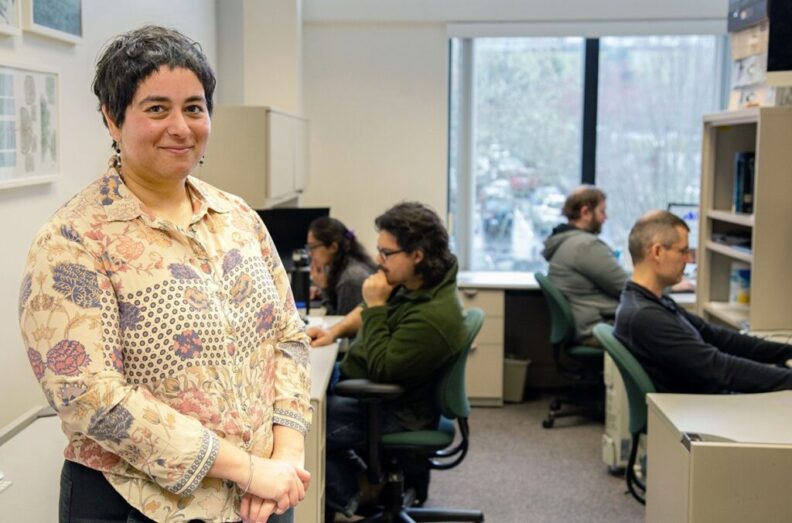
Deepti Singh, associate professor
Washington State University
Singh is an associate professor in the School of the Environment at WSU Vancouver, where she leads the Climate Extremes and Impacts Lab. She served as a lead and contributing author for the Fifth U.S. National Climate Assessment and was also recognized as a Kavli Fellow by the National Academy of Sciences.
She emphasized that attribution science is not about identifying climate change as the sole cause of an event.
“No single event is caused by climate change, but climate affects the weather we experience, and changes in climate are affecting aspects of extreme weather events,” she said. “For example, the severity of a heat wave, or the amount of precipitation that falls when a hurricane makes landfall or the severity of a drought — those are all factors that are affected by changing climate conditions.”
An example: One study of a 2021 heat wave in the Pacific Northwest, conducted by a team of scientists for the World Weather Attribution consortium, found that it was a 1-in-1,000-year event, based on historical patterns, and that it was 2 degrees Celsius hotter than a similar event from 1850–1900 would have been. Without human-caused climate change, researchers concluded, such an event would have been at least 150 times less likely.
While the precise contribution of climate change varied among subsequent attribution studies, there was agreement that warming made the heatwave hotter and substantially more likely.
The report noted that confidence in attribution science varies substantially across different types of extremes. The highest confidence is associated with findings for extreme heat and cold events and others strongly influenced by the consequences of a warming atmosphere, such as heavier rainfall due to more moisture in a warmer atmosphere. Confidence is lowest for phenomena where observational records are limited and for phenomena that depend on small-scale dynamic processes that are inadequately represented in global climate models, such as severe convective storms like thunderstorms and tornadoes.
The field has expanded into the nascent field of extreme event impact attribution, which studies the extent to which changes in the intensity of an event influenced the social, ecological, economic, and health impacts of an extreme event.
“So it’s not just assessing changes in the intensity of extreme rainfall, but quantifying how much additional flooding did that rainfall cause, or how much more mortality or economic damages were associated with a heat wave intensified by climate change,” she said.