By College of Arts and Sciences staff, WSU Insider
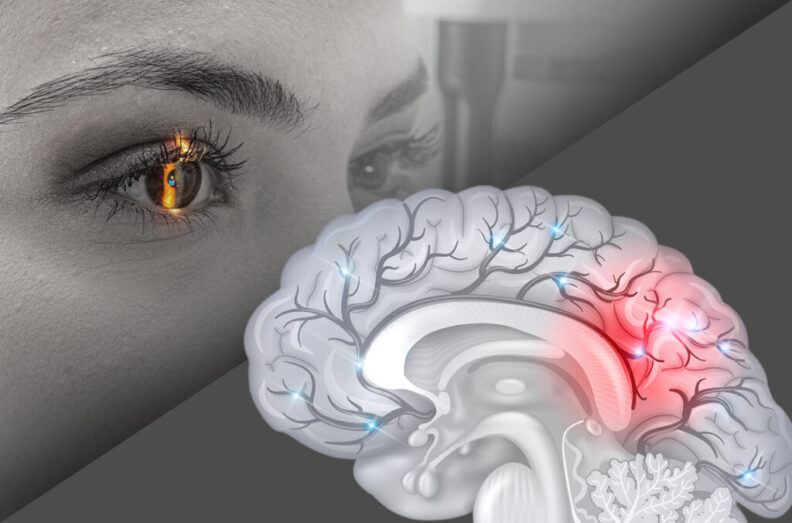
Anjali Sharma, assistant professor in the Department of Chemistry, has received two National Institutes of Health (NIH) grants totaling more than $5.2 million to develop new treatments for traumatic brain injury and corneal neovascularization. Each five-year award supports her lab’s ongoing efforts to design nanotherapeutics for hard-to-treat neurological and ocular diseases.
Sharma’s research targets one of medicine’s biggest challenges, the blood–brain barrier, which prevents most drugs from reaching diseased cells in the brain. Her team is developing dendrimer-based nanotechnologies that deliver drugs directly to injured neurons across this barrier. At the same time, the lab is developing targeted treatments for corneal neovascularization, a major cause of blindness for which no FDA-approved therapies currently exist. The Sharma lab leverages nanotechnology platforms to develop therapies that precisely target injured and diseased cells while sparing healthy tissue, a major limitation of many current treatments.
“In our research, nanotechnology refers to the design of very small, highly controlled nanocarriers measured in billionths of a meter that can carry drugs directly to diseased cells,” said Sharma. “Our dendrimers are nanoscale, tree-like structures that can be customized to recognize specific cells and release drugs in a precise way at targeted locations in the body.”
The Sharma lab leverages nanotechnology platforms to develop therapies that precisely target injured and diseased cells while sparing healthy tissue, a major limitation of many current treatments.
The next phase of Sharma’s brain injury work will refine the chemistry, confirm safety, and assess long-term therapeutic benefits. “One of the greatest challenges in treating brain injury is getting drugs across the blood–brain barrier and into the neurons that need them most,” Sharma said. “Our 2-deoxyglucose dendrimer (2DG-D) technology is designed to do exactly that, deliver therapy directly to injured neurons, offering new hope for patients with traumatic brain injury and potentially many other neurological disorders.”
For the ocular disease project, the Sharma Lab will optimize drug formulations, test safety and targeting in the cornea, and evaluate efficacy in halting abnormal blood vessel growth. “Current treatments for vision-threatening diseases are often invasive and lack precision,” said Sharma. “With our targeted dendrimer platform, we aim to deliver drugs directly to abnormal blood vessels in the eye, providing a safer, more effective, and less invasive way to preserve sight for millions of people at risk of blindness.”
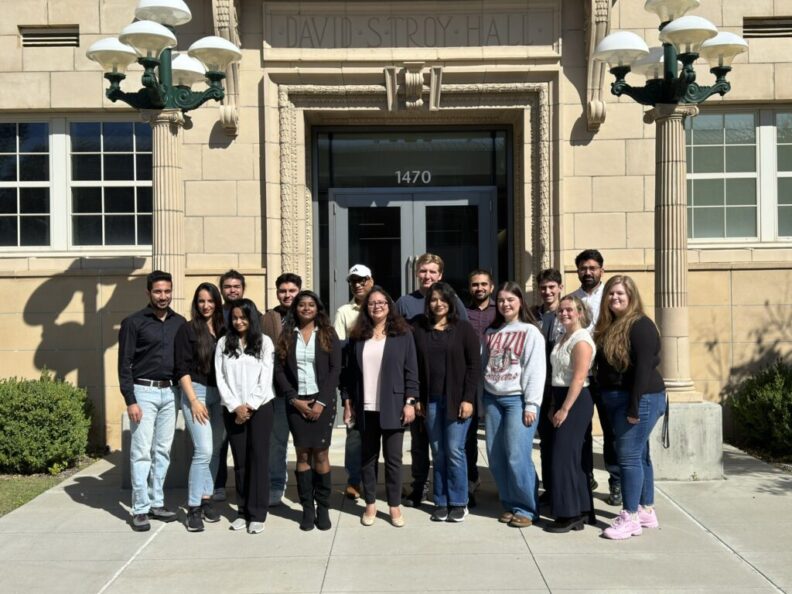
Sharma credited her research team for their commitment and creativity in advancing these complex projects. “None of this progress would be possible without the incredible dedication of our students and postdoctoral researchers,” she said. “Their passion for discovery and teamwork continues to drive our mission of translating nanomedicine from the lab to life-changing therapies.”
Both projects build on Sharma’s nanotechnology platforms, the 2DG-D system for neuronal delivery and a glycodendrimer system for ocular therapy, each offering flexibility for adapting to other brain and ocular conditions, such as Alzheimer’s disease, epilepsy, stroke, and macular degeneration.
To learn more, visit the Sharma Lab.