By Christina Mancebo, College of Arts and Sciences
The U.S Department of Commerce’s National Institute of Standards and Technology has awarded Washington State University $2.5M for critical instrument upgrades in The Franceschi Microscopy & Imaging Center (FMIC). The transmission electron microscope (TEM) and related equipment was made possible through an earmark request supported by Senator Patty Murray (D-WA).
Director of FMIC and biological sciences professor, Michael Knoblauch, received federal funding for the TEM, a light microscope system with fluorescence and large area mapping, and six other ancillary instruments.
The primary instrument, TEM, is a crucial upgrade from the outmoded 13-year-old instrument currently in use. A modern machine will support several advanced capabilities, including the use of cutting-edge cameras that allow significantly higher resolution viewing of samples.
“The acquisition of these new instruments is a huge step forward for WSU because we will be able to do research at a completely different level,” said Knoblauch.
Upon the committee selection of the company for the TEM custom build, operational timing is approximately eight to nine months from production start. The other seven instruments will be acquired and installed over the next several months.
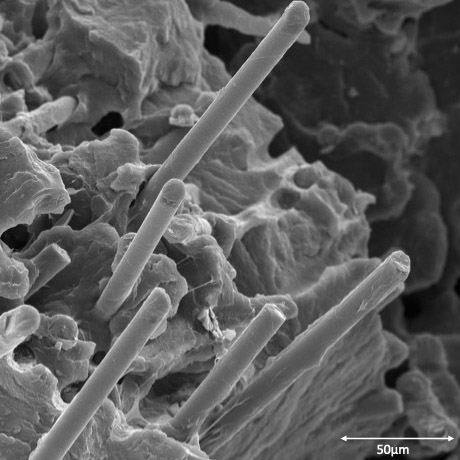
The FMIC, which will house the state-of-the-art instruments, is a research and educational facility for the imaging and ultrastructural study of biological and non-biological materials. It provides electron microscopy and light microscopy equipment for observation and analysis of a diverse array of specimens, including archaeological samples, rocks, animals, plants, food, and more. With 200+ users annually, the centralized facility is available to all WSU researchers and students (25 departments, 5 campuses), as well as external researchers, local industry, and neighboring institutions such as Gonzaga and University of Idaho.
WSU has a long history in electron microscopy. The first electron microscope built in America was built at WSU and is currently displayed in the entrance of the FMIC. WSU remains as a leading educator in the nation for training students in electronmicroscopy, and these new instruments will exponentially improve the quality of research conducted by those using the FMIC facility.
As one of only two locations housing these types of microscopes in the Inland Northwest, the FMIC has a great advantage with a simplified process that enables ease of access to use of the facility’s instruments, an intentional practice to support WSU’s land-grant commitment. All instrument users are required to undergo training provided by the FMIC.
“The FMIC offers services to local industry, as these types of microscopes are very expensive, and many businesses cannot afford them. We provide both the instrumentation and expertise to support our WSU community and the surrounding research community,” said Knoblauch.
Knoblauch’s own research in plant cell biology, biophysics, and nanotechnology will be enhanced by the new instruments and support further research within the emerging field of nanobiotechnology.
The Department of Commerce’s mission is to create the conditions for economic growth and opportunity for all communities. The National Institute of Standards and Technology (NIST) is a laboratory of the Department of Commerce and is mandated to work with industry and academia to enhance economic security and improve our quality of life.
The FMIC is generously funded by the family of Vincent Franceschi, for whom the Center is named. Dedicating his life to plant science, Franceschi was the Center’s first director and held the position until his passing in 2005. His siblings, Joseph and Angela, along with their families, continue to honor Vincent’s legacy through continued support of the Vincent Franceschi Graduate Research Fellowship in Plant Biology.