By Will Ferguson, WSU News & Media Relations, WSU Insider
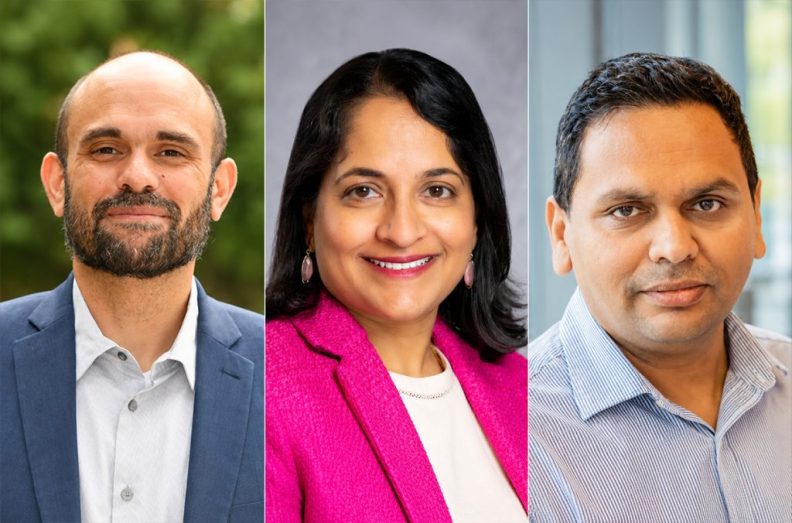
Gov. Bob Ferguson recently recognized three Washington State University faculty members with the 2026 Governor’s Outstanding Leadership Award for their leadership and accomplishments in public service.
David Makin, Radha Nandagopal, and Praveen Sekhar were honored for exceptional contributions in their respective fields of sensor engineering, public safety research, and medical education. They were among 26 recipients from across state government, including the University of Washington and WSU. Established in 1985 by Gov. Booth Gardner, the annual award recognizes state employees who demonstrate leadership that produces better results and a strong commitment to public service and accountability.
The recipients will be honored at a luncheon with the governor Oct. 26 at the Executive Mansion in Olympia.
“Public service is at the heart of WSU’s land-grant mission,” said Provost and Executive Vice President Chris Riley-Tillman. “Professors Makin, Nandagopal, and Sekhar exemplify that commitment, using their expertise to make a meaningful difference far beyond our campuses. We are incredibly proud to see their contributions recognized with this honor and grateful for the lasting impact of their work.”
David Makin, Ph.D.

Since joining WSU more than a decade ago, Makin, a professor in the Department of Criminal Justice and Criminology, has helped transform how Washington collects and uses data on police interactions with the public. He leads the Complex Social Interactions Lab and the Washington State Data Exchange for Public Safety, the state’s official repository for police use-of-force information. The exchange includes data from more than 300 law enforcement agencies representing over 11,000 commissioned officers.
Makin also has made student involvement central to his work. Nearly 500 students have gained hands-on research experience through the Complex Social Interactions Lab, contributing to open-source technologies and projects addressing challenges faced by public safety agencies. One recent project developed an AI-powered tool to help officers gather critical information and follow legal procedures during domestic violence calls.
He credits the success of those efforts to collaboration and a leadership approach that gives team members the trust and support to solve problems.
“These awards are truly about the people that you work with and less about you,” Makin said. “My leadership approach comes down to listening.”
Radha Nandagopal, M.D.
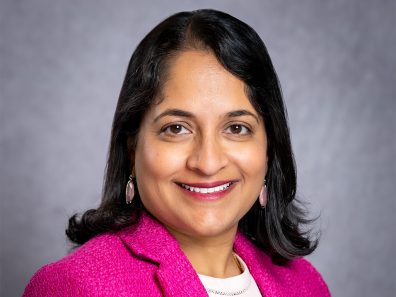
Nandagopal, vice dean for educational and faculty affairs and a professor in the WSU Elson S. Floyd College of Medicine, has helped build the systems used to select and train its medical students. A founding faculty member and practicing pediatric endocrinologist, she helped establish the college’s admissions process and clinical skills curriculum. She also led faculty preparation for the college’s most recent successful accreditation visit.
Nandagopal chaired the college’s admissions committee from 2016 to 2024 and directed its clinical skills program for seven years. Her work helped create the framework for evaluating prospective students and preparing those admitted for the practical demands of caring for patients.
Colleagues who supported Nandagopal’s nomination emphasized that her influence extends beyond the programs and systems she has helped build. They described a mentor who gives others room to think bigger and take on new challenges while providing the candid feedback they need to build confidence and make better decisions.
“Because of her leadership, I have grown not just in my role, but in how I show up as a leader for others,” one nominator wrote.
Praveen Sekhar, Ph.D.
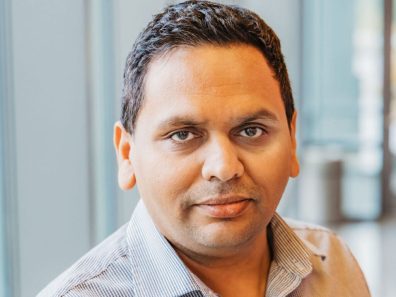
Since joining WSU in 2011, Sekhar, an associate professor of electrical engineering at WSU Vancouver, has built a national reputation for developing sensor technologies used in areas ranging from environmental monitoring to food safety. He has published more than 90 peer-reviewed papers and secured over $2 million in research funding. He is the current chair of the Electrochemical Society’s Sensors Division.
Sekhar has paired his research success with a commitment to giving students the hands-on experience they need to succeed in college and their careers. About 20 of his peer-reviewed publications have involved undergraduate researchers.
He believes providing access to research and professional opportunities helps prepare students for high-demand STEM careers while building the skilled workforce Washington needs.
“To me, the award affirms the importance of long-term collaborative work that supports students and strengthens Washington’s educational and scientific landscape,” Sekhar said.